
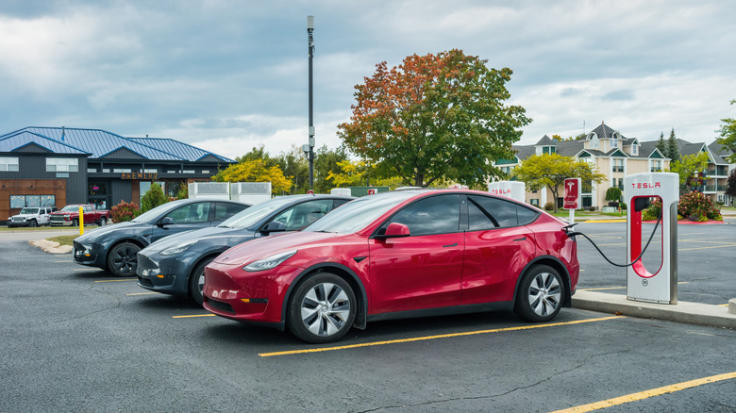
The idea of owning and operating a Tesla vehicle as an everyday driver is far more grounded in reality today than it was when the electric-vehicle (EV) manufacturer introduced its O.G. Roadster in 2008. Driving a Tesla means never needing to refuel at a traditional gas station; it also means little to no traditional maintenance and freedom from emissions. But now, one of the biggest pros of Tesla ownership is access to the company’s extensive network of Superchargers. Located in all 50 U.S. states, at the time of writing, there are 3,135 Supercharger stations throughout the nation, equipped with 38,558 charging ports.
Tesla’s Supercharger ecosystem is open to all Tesla drivers, but the network was once fully privatized. It was only as recent as 2023 that the company introduced the Magic Dock adapter at Supercharger depots, making it possible to top off non-Tesla EVs. But now that Supercharger stop-offs aren’t private anymore (since 2023), most EVs that are compliant with Tesla’s North American Charging Standard (NACS) can be serviced at a Supercharger station.
This is particularly good news for the greater world of EV ownership, as Tesla plans to expand its Supercharger network even more. The company has plans to put up additional stations in a number of U.S. metropolitan areas and also intends to build more private stations to support its expanding fleet of Robotaxi vehicles.